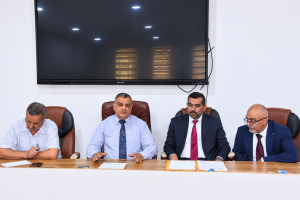
The College of Medicine at the University of Diyala Hosts a Scientific Lecture on Environmental, Energy, and Climate Sustainability, Promoting the Concept of a “Green Campus”
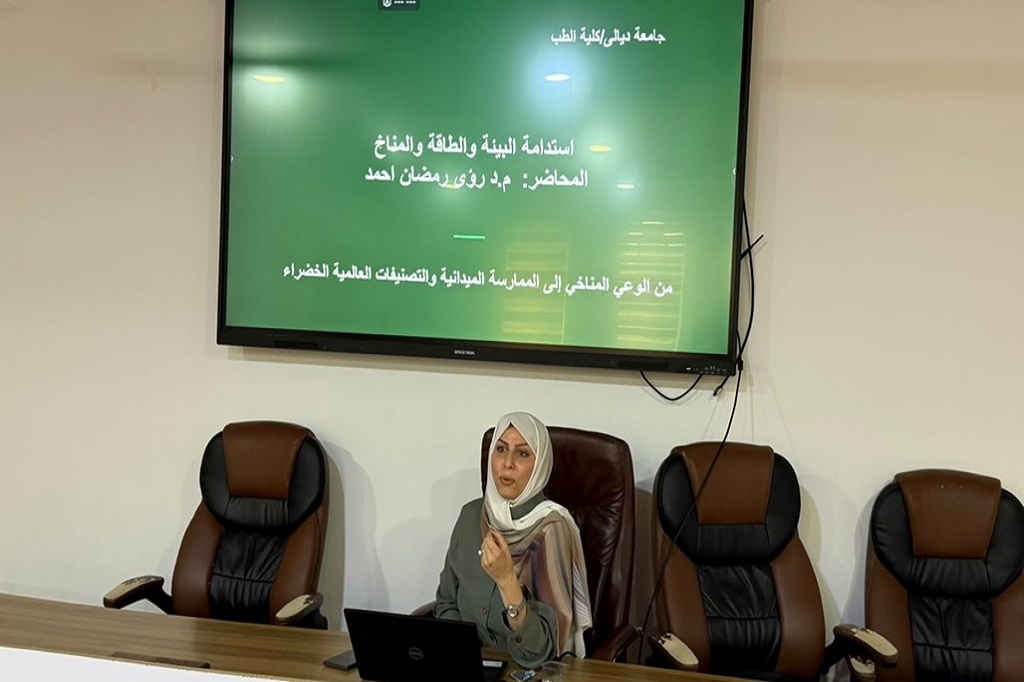
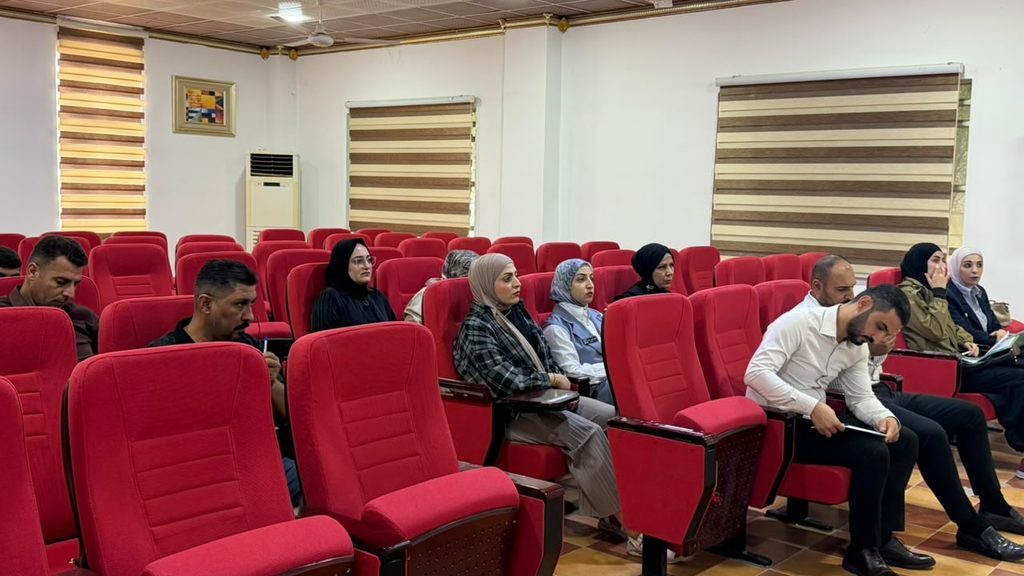
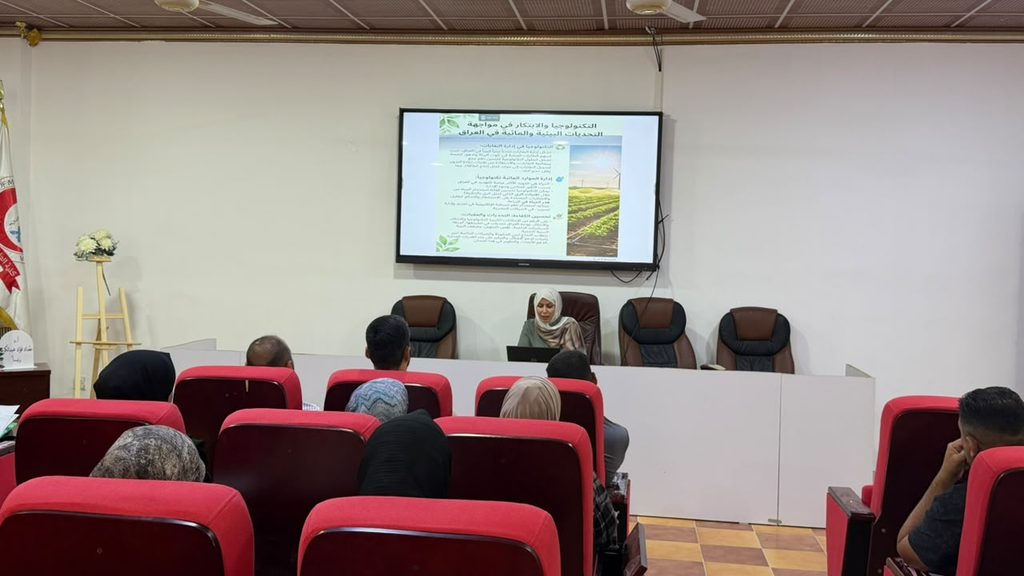
Under the supervision of the Dean of the College of Medicine at the University of Diyala, Professor Dr. Ismail Ibrahim Latif, the Continuing Education Division held a scientific lecture titled “Environmental, Energy, and Climate Sustainability.” The lecture was delivered by Dr. Roaa Ramadan Ahmed, who explored the concepts of sustainable development and climate change—covering their environmental, economic, and social dimensions—as well as ways to foster sustainable environmental practices within educational institutions.
The lecture aimed to raise awareness regarding contemporary environmental challenges, highlighting issues such as water scarcity, desertification, and solid waste management. It outlined potential technological solutions to address these problems, emphasized the importance of conserving energy and water, discussed strategies for waste sorting and recycling, and encouraged a transition toward clean, eco-friendly transportation and solutions.
Furthermore, the lecture addressed the “UI GreenMetric” global university sustainability ranking, which evaluates the performance of educational institutions in areas such as environmental sustainability, resource and energy management, and infrastructure. It underscored the vital role that universities—and environmentally conscious staff—play in embedding a culture of environmental responsibility and advancing the transition toward a “green campus.”
The topics discussed highlighted the intensifying climate challenges—namely water scarcity, desertification, and the growing volume of waste—which necessitate the adoption of practical solutions and modern technologies. Key among these are digital transformation, the implementation of smart irrigation systems, and the development of robust recycling strategies. The lecture concluded with a set of recommendations, most notably: accelerating the adoption of clean energy sources, encouraging environmental investment, and strengthening public-private partnerships. It also emphasized promoting the concept of the “sustainable employee,” fostering eco-friendly practices within the university institution, and adhering to the UI Green Metric standards—all of which contribute to enhancing the college’s environmental performance and meeting the requirements for a green, sustainable campus.
This lecture aligns with the Faculty of Medicine’s commitment to fostering environmental awareness and a culture of sustainability. It directly supports several Sustainable Development Goals (SDGs), including: Goal 6 (Clean Water and Sanitation) by promoting water conservation and improved water management; Goal 7 (Affordable and Clean Energy) by encouraging the use of renewable energy sources; Goal 9 (Industry, Innovation, and Infrastructure) through the implementation of sustainable technological solutions; Goal 11 (Sustainable Cities and Communities); Goal 12 (Responsible Consumption and Production) via waste sorting and recycling; and Goal 13 (Climate Action) by raising awareness about the risks of climate change and promoting practices that mitigate its impacts.